Best Motorcar Logos: The Ultimate Guide to Iconic Automotive Brand Designs
Ever found yourself admiring a car, not just for its sleek lines or roaring engine, but for that distinctive badge proudly displayed on its grille? That isn't by accident. A motorcar logo is more than just a symbol; it's the heart and soul of an automotive brand, a powerful visual identity that communicates heritage, innovation, and aspiration. From the elegance of European automotive logos to the fierce emblems of performance car logos, these designs tell stories of passion and engineering.
In this comprehensive guide, we're diving deep into the world of vehicle manufacturer emblems. We'll explore what makes a logo iconic, uncover the hidden meanings behind some of the most famous auto logos, and understand why these symbols resonate so strongly with enthusiasts and casual drivers alike. So, buckle up; it's going to be an insightful ride!
Why Do Motorcar Logos Matter So Much?
Think about it: when you see a specific emblem, certain qualities immediately come to mind. A three-pointed star evokes luxury and engineering prowess, while a prancing horse screams speed and Italian flair. This instant recognition and emotional connection are precisely why motorcar logos are invaluable assets for any automotive company.
- Instant Brand Recognition: In a crowded marketplace, a unique logo helps a brand stand out. It's often the first point of contact and the most memorable visual cue.
- Communicates Brand Values: A logo can symbolize a company's history, its commitment to quality, its performance aspirations, or its dedication to innovation. For instance, the rings of Audi represent unity and strength.
- Builds Trust and Loyalty: Over time, a consistent and well-designed logo fosters trust. Consumers associate the logo with positive experiences and the brand's reputation, leading to loyalty.
- Marketing and Advertising Power: Logos are central to all marketing efforts. They appear on everything from billboards to social media campaigns, becoming shorthand for the brand's message. Just like understanding the history and meaning behind other famous logos, grasping the automotive equivalent unveils layers of strategic design.
- Aspiration and Status: For many, a car logo isn't just a badge; it's a statement. Owning a vehicle with a prestigious emblem often signifies status, success, and a certain lifestyle.
The Anatomy of an Iconic Motorcar Logo
What makes certain vehicle manufacturer emblems transcend mere branding and become truly iconic? It's usually a combination of thoughtful design principles and a rich backstory.
Simplicity and Memorability
The most enduring logos are often the simplest. They're easy to remember, recognize, and reproduce across various mediums. Think of Volkswagen's 'VW' or Ford's blue oval – clean, distinct, and instantly recognizable.
Timelessness and Adaptability
While trends come and go, truly great motorcar logos possess a timeless quality. They can be slightly updated or refined over decades without losing their core identity. They also adapt well to different applications, from small steering wheel badges to large dealership signs.
Meaning and Story
Every iconic logo has a story. Whether it's rooted in the company's founder, its geographical origin, or a specific vision, this narrative adds depth and emotional resonance. Understanding these stories enhances appreciation for the brand.
Exploring Famous European Automotive Logos
Europe has long been a cradle of automotive innovation, and its car manufacturers boast some of the most recognizable and revered emblems in the world.
Mercedes-Benz: The Three-Pointed Star
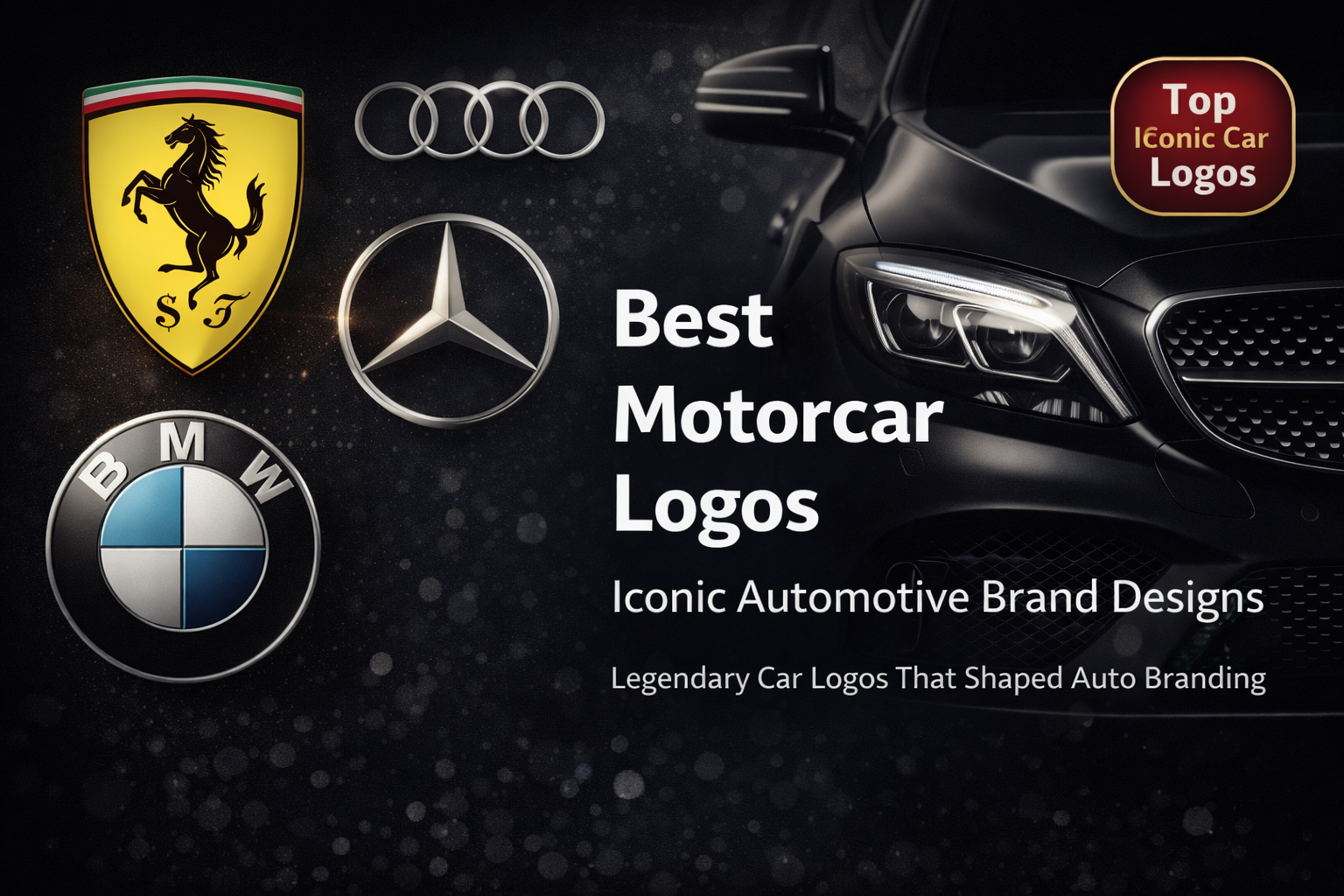
Perhaps one of the most universally recognized luxury car symbols, the Mercedes-Benz three-pointed star dates back to 1909. It represents Daimler Motoren Gesellschaft’s (DMG) ambition for its engines to dominate land, sea, and air. This iconic motorcar logo, often encircled, perfectly encapsulates the brand's commitment to quality, luxury, and engineering excellence across all terrains.
BMW: The Bavarian Blue and White
The BMW logo is steeped in history and often misunderstood. While many believe the blue and white segments represent a spinning propeller, the truth lies in its Bavarian roots. BMW, or Bayerische Motoren Werke, originated in Bavaria, Germany. The blue and white are the colors of the Bavarian Free State. The logo's circular form, however, does nod to its origins as an aircraft engine manufacturer. This vehicle manufacturer emblem proudly signifies German precision and driving pleasure.
Audi: The Four Rings of Unity
The distinctive four interlinked rings of Audi symbolize the 1932 merger of four previously independent motor vehicle manufacturers: Audi, DKW, Horch, and Wanderer. Each ring represents one of these founding companies, signifying their inseparable unity and strength. This powerful European automotive logo stands for technological advancement and progressive design, a testament to collaboration.
Ferrari: The Prancing Horse (Cavallino Rampante)
No discussion of performance car logos is complete without Ferrari's iconic prancing horse. This powerful emblem was originally painted on the fuselage of the fighter plane of Italian WWI ace Francesco Baracca. Baracca's mother suggested Enzo Ferrari use the symbol for good luck. Enzo adopted it, adding a canary yellow background—the color of Modena, his birthplace—and the Italian flag colors at the top. The Cavallino Rampante is synonymous with speed, luxury, and unparalleled automotive artistry.
Beyond Europe: Iconic Vehicle Manufacturer Emblems Globally
While European brands dominate much of the luxury and performance segments, manufacturers from other parts of the world also boast incredibly famous auto logos.
Toyota: The Three Overlapping Ovals
Toyota's current logo, introduced in 1989, features three overlapping ovals. The two inner ovals, overlapping horizontally, represent the customer's heart and the company's heart, symbolizing the mutually beneficial relationship and trust between them. The outer oval represents the world embracing Toyota. This logo, often seen on a wide range of vehicles, from sedans to SUVs, is a masterclass in representing global reach and customer focus.
Ford: The Blue Oval
The Ford logo, with its distinctive blue oval and script font, is one of the oldest and most consistent in automotive history. First used in 1903, the script signature of Henry Ford himself was encased in an oval in 1912. The blue color, added later, gives it a sense of reliability and trust. It's a testament to the brand's enduring legacy and its promise of 'Built Ford Tough'.
Performance Car Logos: Speed, Prestige, and Power
Performance car logos often encapsulate the essence of speed, luxury, and raw power. They are designed to evoke excitement and aspiration.
Porsche: The Stuttgart Coat of Arms
The Porsche crest is a magnificent example of a performance car logo rich in regional heritage. It features the rearing horse from the coat of arms of Stuttgart (where Porsche is headquartered) and the antlers and red-and-black stripes from the coat of arms of Württemberg, the former German state. This intricate design beautifully merges local identity with the brand's global prestige, symbolizing power, precision, and elegance.
Lamborghini: The Raging Bull
The Lamborghini logo, featuring a powerful raging bull, is instantly recognizable and perfectly captures the brand's aggressive and uncompromising spirit. Ferruccio Lamborghini, the company's founder, was a Taurus (a bull in astrological terms), and he also had a passion for bullfighting. Each Lamborghini model is often named after a famous fighting bull. This fierce motorcar logo is a bold statement of uncompromising performance and Italian exoticism.
The Evolution of Automotive Branding
Automotive logos, like the cars themselves, have evolved over time. Early emblems were often ornate and detailed, reflecting craftsmanship. As mass production became prevalent, logos simplified to be more scalable and recognizable. Today, with the rise of electric vehicles and digital interfaces, logos are often rendered in 2D or flat designs to ensure optimal display on screens and modern vehicle aesthetics.
This evolution highlights the crucial role of design and branding in staying relevant. Brands constantly refine their visual identity to communicate their values effectively in a changing world. Understanding these dynamics is key, not just for car enthusiasts, but for any business looking to enhance its online presence and brand visibility through effective strategies like search engine optimization or compelling content marketing.
Choosing Your Own Emblem: Lessons for Any Brand
While most of us aren't designing a logo for a multi-billion dollar automotive company, the principles behind these iconic motorcar logos offer valuable lessons for any business. A well-crafted logo, whether for a small startup or a global corporation, serves as a powerful symbol of identity, values, and aspirations. It needs to be memorable, adaptable, and tell a story.
Take inspiration from these automotive giants: invest time in understanding your brand's core message and translate that into a visual identity that resonates with your audience. Your logo is often the first impression, and as these vehicle manufacturer emblems prove, a strong first impression can last for generations.
FAQs About Iconic Motorcar Logos
What is the most famous motorcar logo in the world?
While subjective, the Mercedes-Benz three-pointed star is arguably one of the most famous and recognizable motorcar logos globally, instantly signifying luxury and engineering excellence.
What makes a car logo iconic?
An iconic car logo is usually simple, memorable, timeless, adaptable, and carries a meaningful story or strong brand association. It evokes immediate recognition and a specific emotional response from its audience.
Do all European automotive logos have historical meanings?
Many famous European automotive logos are deeply rooted in history, drawing inspiration from company founders, regional heritage, or significant mergers. Examples include BMW's Bavarian colors and Audi's four rings symbolizing a merger.
Why are performance car logos often so distinct?
Performance car logos are designed to convey speed, power, luxury, and exclusivity. They often use bold imagery (like Lamborghini's bull or Ferrari's horse) and dynamic designs to reflect the exhilarating experience and high-status associated with these vehicles.
How important is a logo for a car brand's success?
A logo is critically important. It's the visual shorthand for a brand, fostering instant recognition, communicating values, building trust, and driving marketing efforts. A strong logo contributes significantly to a brand's identity and market success.
Conclusion
The world of motorcar logos is a fascinating blend of art, history, and strategic branding. From the elegant simplicity of European automotive logos to the fierce energy of performance car logos, each emblem tells a unique story. These vehicle manufacturer emblems are not merely decorative; they are vital components of a brand's identity, connecting with consumers on a deeply emotional level and enduring through generations.
Understanding the power behind these designs offers insights into successful branding for any industry. So, the next time you see a familiar car badge, take a moment to appreciate the history, meaning, and design prowess that make it truly iconic. For further information on how to enhance your brand's presence and engage with your audience effectively, feel free to contact us.