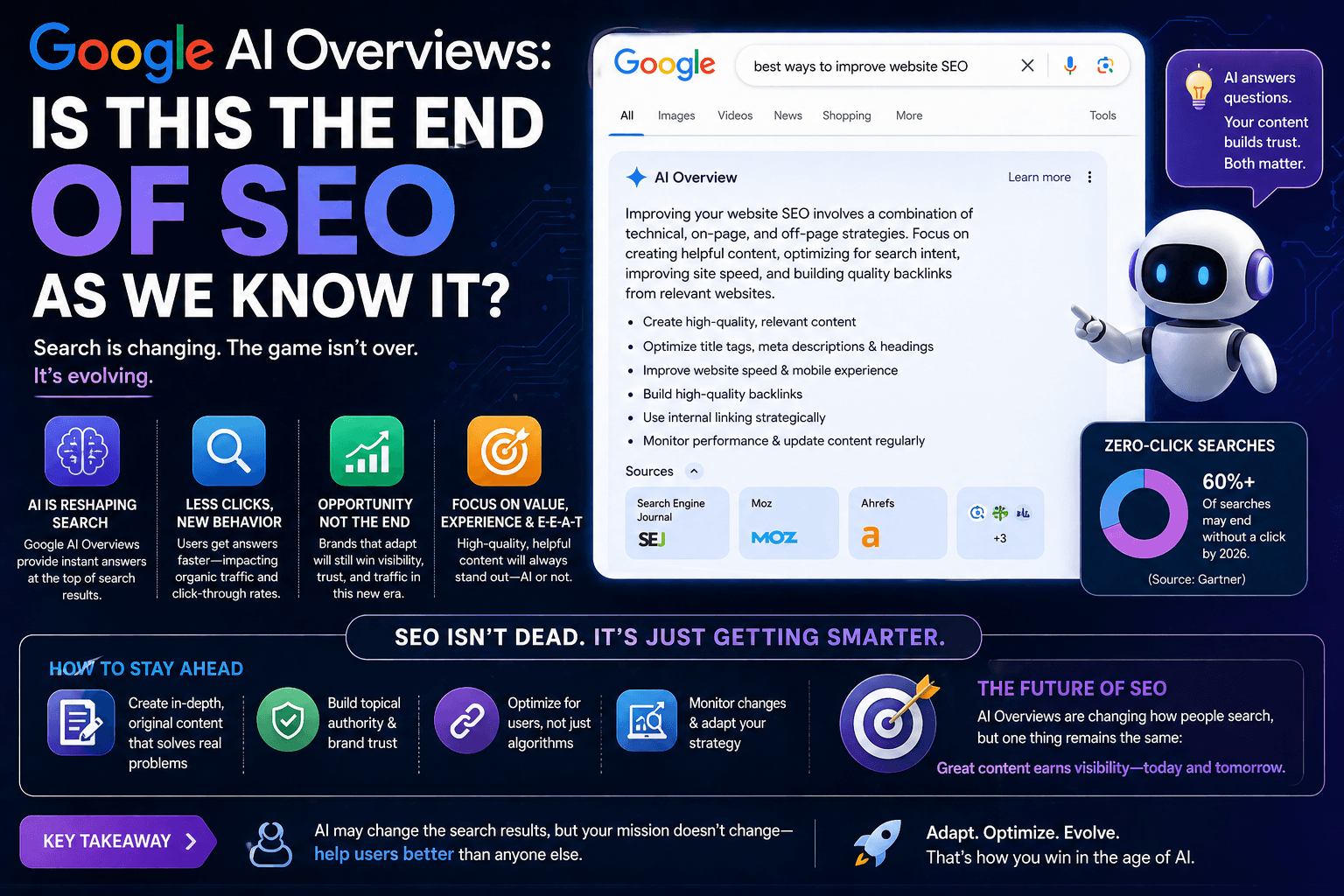
Google AI Overviews: Is This the End of SEO As We Know It?
The digital marketing landscape is in a constant state of flux, driven by Google's relentless pursuit of delivering the most relevant and helpful information to users. The introduction of AI Overviews (AIOs) in Google Search has ignited a vigorous debate within the SEO community, prompting many to ask a crucial question: Is this the end of SEO as we know it? From our vantage point as seasoned strategists, we systematically analyzed the initial rollout and its profound implications. While the knee-jerk reaction might be panic, our assessment suggests a more nuanced reality: AIOs don't signal an apocalypse for search engine optimization, but rather a significant, transformative evolution.Understanding Google AI Overviews and Their Impact
Google AI Overviews are sophisticated summaries generated by artificial intelligence, appearing at the very top of the search results page. They aim to provide direct, concise answers to user queries, often synthesizing information from multiple sources on the web without requiring the user to click through to individual websites immediately. This capability is powered by Google's advanced language models, designed to understand context, extract key facts, and present them in an easily digestible format. The primary purpose of AIOs is to enhance the user experience by reducing the time and effort required to find information. For simple, factual queries, an AIO can fulfill the user's need instantly. For more complex questions, it might offer a foundational understanding, often including links to the source websites it drew upon, encouraging deeper exploration. This shift undeniably alters the traditional Search Engine Results Page (SERP) layout, pushing organic listings further down the page and potentially reducing direct click-through rates for some queries.The Shift in Searcher Behavior
With AI Overviews providing instant answers, searcher behavior is naturally adapting. Users are becoming accustomed to receiving immediate gratification for their queries. This doesn't mean the end of all clicks, but it does mean that content that previously ranked high and relied solely on being the first result might see reduced engagement if its core information is adequately summarized by an AIO. The implication is profound: content must now justify a click beyond simply providing the answer – it must offer depth, unique insights, or a superior user experience that an AI summary cannot replicate.The SEO Panic: Why Some Fear the End
The anxiety surrounding AI Overviews is understandable. For years, the SEO paradigm has revolved around achieving high rankings to capture organic clicks. The fear is multi-faceted:- Reduced Organic Clicks: If AIOs answer queries directly, users may have no need to click on traditional organic results, leading to a significant drop in website traffic.
- Content Summarization: AI's ability to summarize content might "steal" information, effectively bypassing the original creator and devaluing the effort put into producing comprehensive articles.
- Devaluing Traditional Signals: Concerns exist that Google's AI might prioritize different signals than traditional algorithms, rendering established SEO practices obsolete.
Expert Takeaway: While AI Overviews may reduce clicks for simple, transactional, or informational queries where a direct answer suffices, they simultaneously elevate the importance of being recognized as an authoritative source. Being cited within an AIO, even without a direct click, strengthens brand authority and introduces your content to a broader audience.
Adapting to the New Reality: SEO's Evolution
Rather than signaling an end, AI Overviews necessitate a maturation of SEO practices. The core principles of providing value and meeting user intent remain, but the methods of execution must evolve.Beyond Keywords: Intent and Entity Understanding
The era of keyword stuffing is long over, and AIOs further underscore this. Future SEO success hinges on a deep understanding of user intent and comprehensive coverage of entities. Content must aim to answer not just the explicit query, but also the implicit questions a user might have. We must create authoritative resources that fully explore a topic, anticipating follow-up questions and offering a complete picture. This positions content as a truly valuable, indispensable resource for both human users and AI systems looking to synthesize information.E-E-A-T Reimagined: The Core of Future SEO
Expertise, Experience, Authoritativeness, and Trustworthiness (E-E-A-T) have always been crucial, but AI Overviews amplify their importance tenfold. For an AI to confidently summarize and cite your content, it must recognize your website as a highly credible and trustworthy source. This means:- Demonstrating Expertise: Content should be written by demonstrable experts in the field. Author bios, credentials, and real-world experience become vital signals.
- Building Topical Authority: Consistently producing high-quality, comprehensive content around a specific niche establishes your site as a go-to authority, making it a prime candidate for AI sourcing.
- Brand Visibility and Reputation: A strong, recognizable brand with a positive online reputation will naturally be viewed as more trustworthy by AI and users alike.
Optimizing for AI Integration
Just as we optimized for Google's algorithms, we now must optimize for AI's consumption. This involves:- Structured Data (Schema Markup): Implementing precise Schema markup helps AI understand the context and relationships of content elements on your page, making it easier to parse and summarize accurately.
- Clear, Concise, Factual Content: AI thrives on well-organized, unambiguous information. Ensure your content is easy to read, logically structured, and factually accurate.
- Unique Perspectives and Proprietary Data: Offer something that can't be found elsewhere. Original research, unique case studies, proprietary data, and distinct viewpoints provide value that AI summarization struggles to replicate and makes your content invaluable.
The Role of Traffic Drivers
In a world where some direct search traffic might diminish, other traffic channels become increasingly vital. Direct traffic, brand searches, email list sign-ups, and community engagement will be paramount. The goal shifts from merely ranking for a keyword to building a loyal audience that actively seeks out your expertise.SEO Today vs. SEO Tomorrow
To illustrate the necessary shift, consider the following comparison:| Aspect of SEO | Traditional Focus (Pre-AIO) | Evolved Focus (AIO Era) |
|---|---|---|
| Content Goal | Rank for keywords; drive clicks. | Be the authoritative source; provide comprehensive answers; earn citations within AIOs and drive brand recognition. |
| Primary Metric | Organic traffic, keyword rankings. | Brand visibility, E-E-A-T signals, conversion rates, customer lifetime value, direct/branded traffic. |
| Content Structure | Optimized for readability and on-page signals. | Optimized for AI parseability, structured data, clear semantic organization, depth and breadth of topic. |
| Authoritative Signals | Backlinks, domain authority. | Demonstrable expertise, author credentials, brand reputation, contextual links, first-party data. |
| User Interaction | Entice immediate click-through. | Provide immediate value (even in summary), foster deeper engagement, build loyalty beyond search. |
Expert Takeaway: The value of your content increasingly lies in its intrinsic quality, trustworthiness, and comprehensiveness, not just its ability to rank. Focus on becoming an indispensable resource for users and an undeniable authority for AI, ensuring your brand and expertise are recognized, even if the initial search interaction doesn't involve a direct click.
The Untapped Potential: New Opportunities for SEO
Far from signaling an end, AI Overviews open new avenues for innovative SEO strategies:- Voice Search Optimization: AIOs are a natural fit for voice assistants. Optimizing for conversational queries and immediate, concise answers will be key for capturing voice search traffic.
- Long-Tail, Complex Queries: While AI excels at summarizing, it still struggles with highly nuanced, subjective, or open-ended questions that require critical thinking or human empathy. Content targeting these complex queries will continue to drive clicks.
- Specialized Niches and Niche Authority: For highly specialized or emerging topics, human expertise remains irreplaceable. Becoming the definitive source in a niche will make your content invaluable to both users and AI.